
FOLKLORE STORIES IN DIFFERENT REGIONS IN THE PHILIPPINES
REGION IX – ZAMBOANGA PENINSULA
FOLKTALE
” Tale of the Dragon and the Three Brothers.”
Michael Lawrence Forman
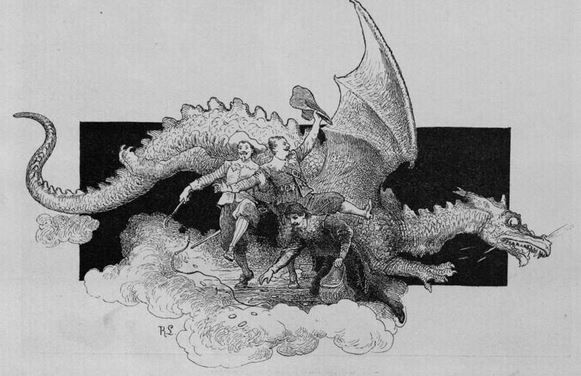

A long time ago, in a place far away, there was a reyno-reyno, or mean to say, a kingdom. There in the kingdom, all the people, they were always happy. And there in the kingdom there was also a king. And this king, he had three princesses—daughters. Uh, those princesses were very beautiful. Of course, isn’t that so, since they were princesses, naturally they were beautiful. Now then, there in the kingdom, they didn’t have many problems. There was plenty of food. As for the people, all of them there were not in the habit of quarreling with one another. But the one—there was just one thing there; they had a difficulty. Because on a certain island there was a dragon. And that dragon had twelve heads. Every year, that dragon, since he could fly, went there to the kingdom and seized one person to take there to his island, and there he ate that person. Now this year, they say, that dragon went, and of all the many people there, he happened to take the princess, the youngest of them, the most beautiful of them. Now the king became very sad indeed.
So he said, The fellow who is able to free his child from the dragon, the princess will become his wife. And if he (the king) dies, the husband of that princess will be the one who will become king. That’s how it is. Since all the people knew that the princess was very, very beautiful, they all had an interest in being able to get that girl. Now, what did they do, they went in a group and they went there to the island. But when they saw the dragon, they were afraid. There was nothing they could do. What did they do, they just went back again to the kingdom. And now, that dragon, he was very smart, he didn’t eat that girl yet. He said, If that girl was there in his possession, many people would try to go and get her. Well, if there are many people approaching near to him, those people are the ones he’ll eat. He won’t need to go to the kingdom every year. So, what did they do, what did all the people do, they were trying to find someone who could lead them. But very many weeks passed, they all wanted to go get the girl, but they were all afraid. Now there in the kingdom, there was a father there, a man who was already a widower. His wife was already dead. And this widower had three young bachelor sons. The name of the oldest was Pedro. Next, the second was Pablo. And the third was Juan. Okay? Now, that oldest son of them all, Pedro, his skill—uh, he was a very good marksman.
If he had his rifle, even if he was a great many meters away, if he wanted to shoot the eye of a fly, he would hit it precisely. A great marksman this Pedro was. Okay? I mean to say, he was very much a sharpshooter. Wherever he wanted to shoot, right there was where he would hit. Now that Pablo, his profession was tailor. And as a tailor, even if he opened a stomach—the doctor, I mean—before the blood flowed, he could sew it up again. It seems he was pretty quick, he sewed pretty well. Now, as for the profession of that Juan, the youngest of them all, he was a good thief. No matter what he wanted to steal, no matter who was watching him, he could steal it. A chicken is laying eggs, huh? The chicken is laboring right there, huh? The chicken doesn’t feel a thing if he steals the chicken’s eggs. So, those are the skills of the three brothers. Now, they said, it would be better if we three try to go get that girl. So what did they do, they prepared a small boat, but a rubber one, that kind which you just put air in—like a lifeboat, huh? Merely of rubber. Well, okay. They set out there for the island. When they arrived there at the island, they could see that dragon.
There he was, watching the girl. As for the girl, she couldn’t get away. That princess, she couldn’t get away, because the dragon, he was there. But that dragon, it so happened, that dragon was sleeping there. Okay, even if six heads were sleeping, the other six heads—uh-oh!—they were awake. But since this Juan, well, he really steals well, right? He’s really an expert thief, right? He said to his brothers, You wait here in the boat, okay? Because I will go steal that girl. Now, since that Juan was a very good thief, even though the six heads were watching, they didn’t manage to see Juan stealing that princess. He was able to get her. Good. He ran carrying that princess toward the boat. When they reached the boat, what did he do—since it took place a long time ago, the boat didn’t have a motor, like a motorlaunch, like that kind of boat, right? They just rowed. But the distance of that island from the kingdom was a little far. For sure it was a few days they would row before they would reach the kingdom. Now, after so many hours had passed, all the twelve heads of that dragon, they woke up. They looked for the girl. She was no longer there. So, what did the dragon do, he flew up into the air and was looking for where the princess had gone, because he did not know where she had gone. One of his twenty-four eyes—since he had twelve heads—chanced to see. Aba! So there they were in the boat. What did the dragon do then, he swooped down because he wated to make them all sink but get the princess back. Juan, since he had already done his work, he had stolen the girl, said to his two brothers, You take care to do your work.
I have done my part. Pedro said, Don’t worry. I’ll take care of that dragon. What did he do, he took his rifle, even though the dragon was still far away, he aimed his rifle and snapped off a shot. Oh, straight in the eye he hit. Well, since the one eye of that dragon was blinded, that dragon fell down, but when it fell, it fell right on top of their little boat. Their boat was split in two. But before the water got in, this Pablo because he sewed so well—he was a sastrero, a tailor, right?—the water had not come in before he finished sewing (the boat back together). Now, the dragon flew again. When it was near again, Pedro fired another shot. It fell there again onto their boat. But what happened was just like the other time. Before the water got in such that they would drown, Pablo finished sewing it up. After so many repetitions, all the twenty-four eyes of the dragon, Pedro finished shooting them. Well, the dragon died. Now, they arrived there at the kingdom. When they arrived there at the kingdom, all the people were there and they met them and everybody was happy. And now in that place there was a great problem because of the king’s promise: If someone could free his girl from the dragon, he would marry that girl. Even if he was able to steal the girl, if Pedro had not been there the dragon would have gotten her from them again. Now, even though Pedro shot (the dragon), when it fell on top of their boat, if Pablo weren’t there they all would have drowned. Now, the problem, huh? The problem: Who is to marry the princess? That is the great problem. Well, since many were unable to decide, the king—since he of course was, uh, the equal of Solomon, right? very wise, right? equal to Solomon—he said, We certainly have a solution for this problem. You, Pedro, if you had not been there, (you) would not have been able to get the princess because the dragon would have killed you. But if Juan had not been there, you wouldn’t have been able to get the girl either. And if not for Pablo, you all would have died. Now, since your father is a widower, has no wife, it would be better if your father marries the princess. Well, the three brothers did not quarrel (with this). The father married the princess. For sure, they all were happy. There were no bad feelings one toward the other. They simply had done a favor for their father. In the end, the father became king. Goldish gold, the tale’s been told.
LEGEND
” The Legend of the White Goat “
Anonymous


In the early years of Zamboanga, there was once a family who had a beautiful young daughter, this girl loved to entertain herself by wandering around in Mount Pulongbato, however her parents forbade her to go to the mountain because of her beauty, they fear that something may happen to their daughter.
But, stubborn as youth, she ran off towards the mountain once more, because she couldn’t resist.
Having too much fun she lost track of where she was, as the night approached she was still trying to find her way back, but was unable, having run out of options, all she had left to do was sit down and cry.
A few moments later a mythical Nymph appeared, the nymph pitied her because she was lost and was crying, but she knew that if somehow she managed to get back home she couldn’t come back, because her parents wouldn’t let her, so out of sympathy the nymph transformed her into a White Goat, so that she could live and in the mountain.
Ever since then people who lived near the mountain could hear the sound of a white goat who seemed to be having fun.
MYTH
” The Thalon”
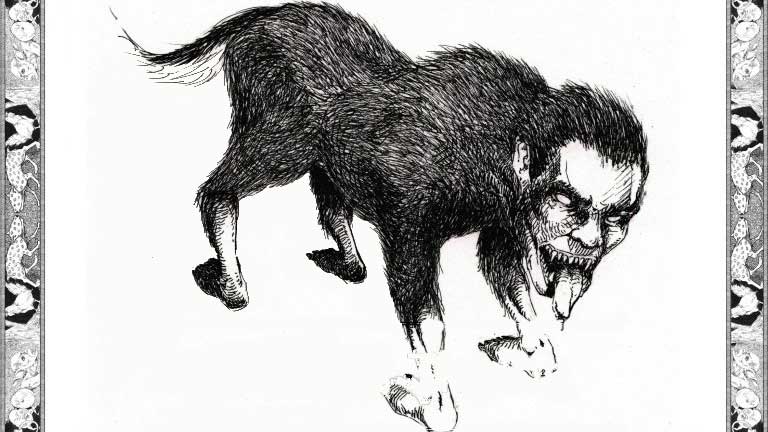
The Mhanamad is the male Thalon. Among the two kinds of Thalon this one is the mischievous monster. It does not directly harm its victims and only seeks to scare them. They do not announce their presence and follow their target usually trailing behind or to the side. Their preferred targets are foreigners, or people not from the area of his territory. To deal with a Mhenamad Thalon one simply shouts at it, as if scolding it or taunting it into battle. It is a cowardly creature and will run away as soon as this happens.
The Thamad Thalon is the female Thalon. They are more malicious compared to their male counterparts. They harm their intended victims and seek to eat them. From far away the Thamad Thalon announces her presence, the victim will hear a scream as if from a mountain top before the Thamad Thalon stalks her prey. It is no use fighting a Thamad Thalon unless with a Gbelyan, one must run from a Thamad Thalon and hope they are fast enough.
EPIC
” Sondayo “
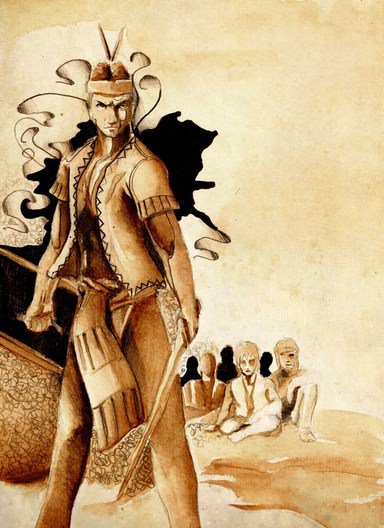

Sondayo is the son of Datu Salaria, the chief of Tubig Silayan, and his wife, Salaong. One day, while bathing in the magical streams of Silayan, Salaong felt heavy after dipping seven times, even if she is not pregnant. Upon returning home, she combs her hair to dry and from it, a child falls out. This was how Sondayo was born. A magical child, he matures very fast. Within a short period, he asks his parents’ permission to go on a quest. His father gifts him with a mighty sword, while his mother provides him with beautiful raiments. However, a pigeon, limmon, gives him a dire warning not to embark on this journey. He ignores the warning and goes off flying on a magical scarf, monsala, into the center of the sun with the aid of lightning. He encounters two datus, Daugbolawan and Lemolak, and causes their enchantment. After several days, he hears the sound of the pounding beat of a buklog festival which enticed him to go and join the festivities. He and the two datus go there in spite of a warning again by a limmon, the omen bird. While chewing on his betel-nut quid, mama’, he dreams of two ladies, Bae Bolak Sonday and Benebong. In his dream, the ladies offer him their own mama’.
He accepts that of Bolak Sonday and declines Benebong. In the festival, he actually meets the two ladies. A rivalry among the men ensues, especially when one of the datus was favored by the ladies. Sondayo becomes jealous and engages the datu in a duel that goes on for two years. Dire phenomena ensue when the waters dry out, forcing life there (like the giant eels) to seek refuge on land. The deity, Asog, grows tired of witnessing the battle. On the third year, he intervenes and stops the fight. He reveals to them that they are brothers who both fell from the hair of Salaong. The two are reconciled and travel to Balatakan. Sondayo invites his brother to visit their parents in Liyasan, but he refuses because he is the guardian of Balatakan. Sondayo puts him to an enchanted sleep, while he cuts off the hills of Balatakan and brings these to Liyasan. Thus, the brothers are reunited with their parents in a huge celebration.
Much later on, Datu Salaria asks Sondayo to accompany his cousins, Daugbolawan and Lemolak, to Manelangan. They intend to propose marriage to Bolak Sonday and Benebong. While traveling, they meet Ba’e Pigdindingan who confronts them. They kill her but revive her at night. Reaching Manelangan, they see that Bolak Sonday has many suitors. The parents of Bolak Sonday, however, demand so many gifts which the suitors could not provide. Sondayo, with his magic, is able to comply with all the demands for his cousin. They are finally accepted. Datu Lumalab and the other datus engage them in battle. Sondayo leaves his spear to fight on its own, defeating the datus after several months of fighting. The cousins, using a golden bridge, return home bringing their wives. Sondayo falls ill when he returns to Liyasan. He asks his magical scarf, monsala, to fetch Bolak Sonday and Benebong, but they arrive too late. Sondayo is already dead. Bolak Sonday looks for his spirit in the underworld, while Benebong searches the upper world. Three weeks pass but they could not find him. Benebong then searches the heavens, while Sonday focuses on earth. But still they fail. Finally, two birds tell them that they should search for Sondayo’s soul in Tubig Piksiipan, where he is a captive of amazons. They ride on their own magical monsala with the help of lightning. They fight the amazons for two months for Sondayo’s spirit and defeat them. They wake Sondayo up from his deathly sleep and quench his thirst with the sweat of the sun which he asked for. They bring it to him in a golden cup then they all return home. Disaster befalls Bolak Sonday when she cuts herself while preparing betel-nut quid. She dies. In return, Sondayo and his kindred search for her spirit.
The two birds again reveal that her spirit is in Katonawan, a prisoner of a datu. Sondayo battles the datu and frees the spirit of Sonday. He revives her and they both return to Liyasan where everyone celebrates. Later, his cousins request for his assistance in obtaining the dowry needed for Datu Tulog to marry Lengotubig. He goes to Tubig Sumina. Sondayo, with his magic, obtains the dowry. He returns to Liyasan. There, he dreams of a buklog being celebrated. He wakes and gets his kin and wives to go with him to join in the celebration. They ride their monsala to Manelangan where the buklog is being held. The buklogan rises entirely to heaven and when it descends again, Sondayo and his relatives are not in it anymore. They have remained in heaven.
REGION X – NORTHERN MINDANAO
FOLKTALE
” The Flood Story “
Anonymous
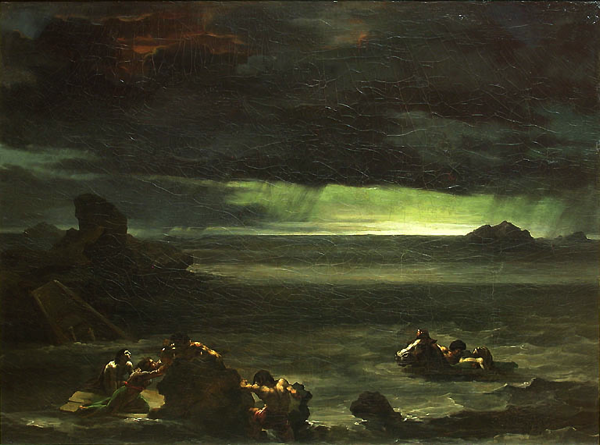

Once upon a time, when the world was flat and there were no mountains, there lived two brothers, sons of Lumawig, the Great Spirit. The brothers were fond of hunting, and since no mountains had formed there was no good place to catch wild pig and deer, and the older brother said: “Let us cause water to flow over all the world and cover it, and then mountains will rise up.” So they caused water to flow over all the earth, and when it was covered they took the head-basket of the town and set it for a trap. The brothers were very much pleased when they went to look at their trap, for they had caught not only many wild pigs and deer but also many people.
Now Lumawig looked down from his place in the sky and saw that his sons had flooded the earth and that in all the world there was just one spot which was not covered. And he saw that all the people in the world had been drowned except one brother and sister who lived in Pokis.Then Lumawig descended, and he called to the boy and girl, saying: “Oh, you are still alive.”
“Yes,” answered the boy, “we are still alive, but we are very cold.”
So Lumawig commanded his dog and deer to get fire for the boy and girl. The dog and the deer swam quickly away, but though Lumawig waited a long time they did not return, and all the time the boy and girl were growing colder. Finally Lumawig himself went after the dog and the deer, and when he reached them he said:
“Why are you so long in bringing the fire to Pokis? Get ready and come quickly while I watch you, for the boy and girl are very cold.”
Then the dog and the deer took the fire and started to swim through the flood, but when they had gone only a little way the fire was put out. Lumawig commanded them to get more fire and they did so, but they swam only a little way again when that of the deer went out, and that of the dog would have been extinguished also had not Lumawig gone quickly to him and taken it. As soon as Lumawig reached Pokis he built a big fire which warmed the brother and sister; and the water evaporated so that the world was as it was before, except that now there were mountains. The brother and sister married and had children, and thus there came to be many people on the earth.
LEGEND
” The Battle of Tagoloan “
Regino L. Gonzales
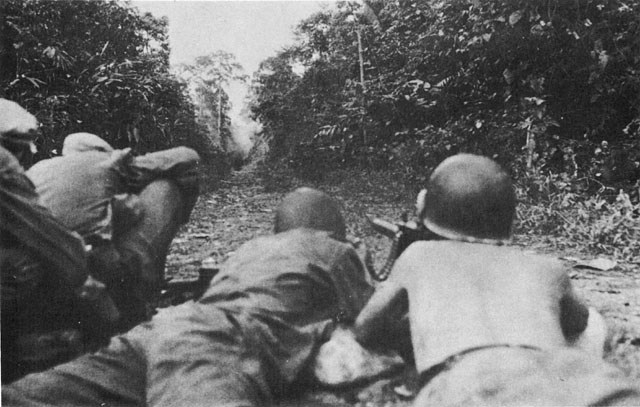

It was a chilly night but Regino was sweating in his foxhole in the beach of Tagoloan, a town in northern Mindanao. It would be his first encounter against the formidable Japanese imperial army. He prayed the prayers that his grandfather taught him, as he pondered what would happen to his family if he dies or is captured. His unit was part of the Filipino-American forces, thinly stretched over a long coastline, tasked to defend northern Mindanao against the Japanese forces.
Weeks earlier, the American intelligence warned of an impending Japanese invasion of northern Mindanao. Anticipating a naval-led attack, the American army commander in Mindanao ordered the erection of barriers, during low tides, along a long coastline as far as possible seaward. Materials and time limited, they could only come up with a makeshift structure- barbwires stringed to wooden poles planted into the seabed. The commander just wanted to put up a good fight. He knew that their defense preparations could not stop a determined attack by the better-armed Japanese. Past midnight, the tide was peak high when Regino observed silhouettes of scores of warships, the invasion fleet. Then artillery bombardment started coming from the ships. Mercifully, they were off the mark though some landed just behind his foxhole. He tightened his grip around his machine gun, slid his finger into the trigger and waited. They have limited ammunition and were ordered not to fire back until the lead boats reach the barriers.
Regino saw the attack barges emerging in front of the ships. Artillery bombardment continued as the barges raced toward the beach. The Japanese invasion commander was probably surprised that there was no return fire from the American side; then was puzzled why the barges were stalled. The barriers held and the barges stopped moving forward. The defenders took advantage and rained fire on them, aiming at the unarmored sides. Regino fired his machine gun at will and was exhilarated at being able to fight an army known for its courage and many victories. The attackers must have suffered huge casualties as the barges turned back to the warships.
The defenders’ seeming triumph was short-lived. A second wave of barges returned. Regino saw divers latch chained hooks to the barbwires. Then the barges tugged them away, dismantling the impediment across his sector. Other units in the long defense line did not face an attack. The invaders concentrated on particular stretches intending to punch holes across the defense line. Regino’s section was one of those they selected to break through.
The barges speeded towards the beach and the defenders were fast running out of ammunition. Regino, had to regulate his machine gun fire in short bursts to conserve his remaining bullets. Four hours after the attack begun, the defenders ran out of ammunition.As previously instructed, Regino removed the pin from his machine gun, abandoned his foxhole and proceeded to the rendezvous point. The attackers quickly established a beachhead. Some even shouted the Japanese war chant as they chased the retreating adversaries.At the rendezvous point, the American commander advised the surviving combatants that they can choose to join the surrender to the Japanese forces or revert to civilian status and later join the guerilla movement. Regino and most of the Filipino soldiers opted for the later. Regino changed to civilian clothes and visited the scene of battle the following day. He was promptly captured, made to help bury the dead, Japanese, American and Filipino, in a mass grave and was released by a dignified looking Japanese officer.
MYTH
” The Evil Aswang “
Anonymous
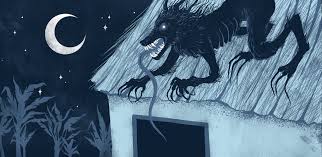

The myth of the inherently evil aswang, a ghoul characterized as a kind of vampire that hunts for young children, unborn fetuses or dying persons, is well known throughout the country,
September 2004, a 16-year-old boy in Tantangan, South Cotabato witnessed that his 14 year old brother was attacked by an aswang, which was disguised as a big black dog with red eyes. The two boys were sleeping in a small shack, guarding their farm ducks; all of a sudden they heard a squeaking sound outside the makeshift hut. The teenager said that a big black canine, about three feet-high, was about to bite the neck of his younger brother when the creature set its glowering eyes on him. The youngster grabbed his father’s rifle and shot the beast, which fled in the darkest part of the rice field. The younger brother was accidentally hit in his right leg and brought to the local hospital. The description given by the bloke fits the physical appearance of a human flesh eating aswang, a supernatural being who has the ability to transform itself into different forms while devouring a prey.
EPIC
” The Guman of Dumalinao “
Esterlinda Mendoza Malagar
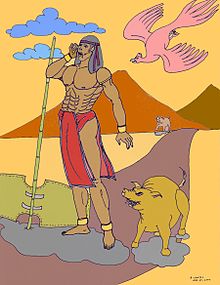

The Kingdom of Mount Dliyagn is set in the mountainous regions of the Zamboanga Peninsula, which is drained by a straight river whose bottom is lined with porcelain and beads of gold, and whose banks are bordered by flowering plants. Datu Pomb’nwa, his wife Bayslaga, and their young daughter rule the kingdom. They live in an eight-room mansionwith furniture made of gold. Datu Pomb’nwa and Bayslaga used to have other children, but their daughters drowned in the river, and their sons, venturing out in search of them, failed to return. The other members of the household are Sampilakan and Tinayobo.
One day, while Datu Pomb’nwa is making a shield, he hears disturbing sounds from the sea. War vessels are coming. Tinayobo sounds the magical gong, and as she beats them, the mast and the outriggers of the invading ships are shattered. After six days, the enemies, sent by three evil queens, land. They start to scale the mountain to reach the kingdom, but because the mountain keeps growing taller, it takes the invaders a month and a half to reach the summit.
When they reach the royal household, the invaders are met by Tinayobo. They strike her with a kampilan or blade, but the blow lands on the porch, damaging it. Tinayobo restores it in a flash. Datu Pomb’nwa and Sampilakan join the fight. After a month, however, two old warriors grow exhausted, and they fall to the ground. This prompts their daughter, Ba-e ri Dliyag’n, to fight. Initially, she successfully battles the enemies, but after a month, she bathed in blood. Thinking her dead, the enemies abandon her.
A young man, Sakandal, told that Dliyagn is under attack, appears to help. He restores the princess’ spirit and beauty. As he goes to the mansion with her, the strength of Datu Pmb’nwa and Sampilakan is restored. The ba-e’s parents take notice of the young man and hope that he will propose to their daughter someday. The daughter is then given a name, Pailalam ri Bolak, for she has come of age. She is also given a chewing box. As she chews, her beauty increases. She then learns about her brothers and sisters.
Meanwhile, Sakandal goes to battle in the kingdom of Tomanong. For days, Pailalam ri Bolak observes him fight from the mansion’s porch. Sakandal meets the chief of the Tomanong. As they fight with their kampilan, the enemy causes the river to be overrun by fire, but Sakandal drowns it with flood. After two weeks of fighting, the chief of Tomanong retreats almost lifeless. Sakandal, too, is exhausted, but Pailalam ri Bolak fans him and restores his strength.
Pailalam ri Bolak receives a message from the maiden of Patola, who is asking whether she should go with a stranger who has come to Mount Patola. Sakandal takes his ring and gives it to Pailalam ri Bolak, telling her to knot it in the kerchief and send it to the maiden of Patola. The invaders arrive ahead of Sakandal’s ring. The ring drops and becomes unknotted. Out of the ring comes a man named Salilayan. He helps defeat the invaders. The kerchief returns to the mansion, and Sakandal asks Pailalam what else he can do for her. She asks him to lend her his magic powers. She is given a kerchief with 18 rings knotted to it. She disappears from the spot.
The guman shifts to the kingdom of Pagkatolongon. The kingdom is in the same situation as Dliyag’n. With no fighting men, the women of the kingdom are inspired to fight. A man named Madlawe helps them, just as Sakandal has helped Pailalam ri Bolak. The second part, however, may be said to be more magical than the first. Paillalam ri Bolak reappears to take an important role. The guman ends with the return of the missing children. A traditional “buklog” or feast is held to celebrate the union of the two kingdom.
REGION XI – DAVAO REGION
FOLKTALES
” The Untold Tales of the Giant Balete Tree in Talikud Island “
Anonymous
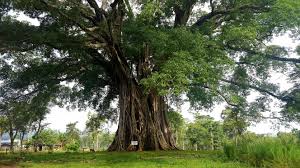
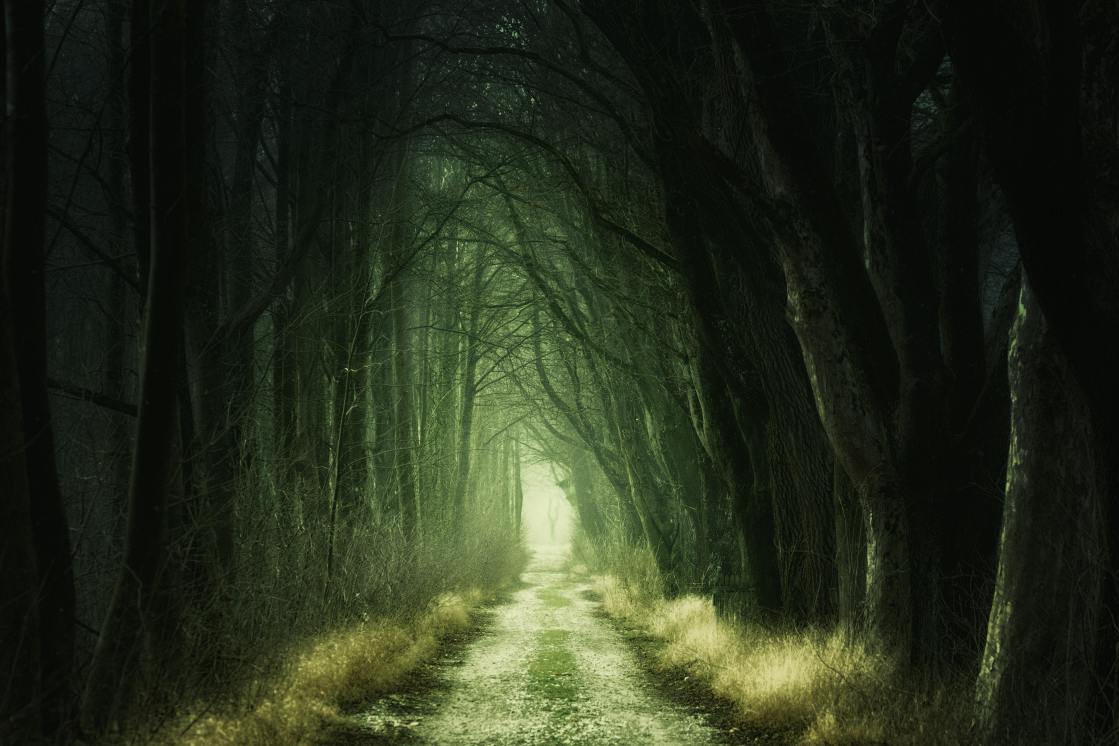
There is more to Talikud Island than its long stretches of white sand beaches. It is the source of many horrific stories that locals have believed in from generation to generation. Take the giant Balete tree that stands just along the road in the interior of the island. The people from the community would make a noise barrage surrounding the tree to drive away the bakunawa. Folk tales say that the bakunawa or dragon monster has stolen the sun or moon. It is believed that the giant balete tree is the bakunawa.
The second story revolves around a boy Jolito who climbed the tree and threw stones at people while playing pranks on them. One day, while climbing the tree, he stumbled upon its opening and entered a shimmering beautiful palace.
Not noticing that he’s been missing for a long time, his relatives started to worry.
The child’s family sought the help of Manong Ete, an albularyo. The albularyo told them that Jolito was being kept by the spirits who are guarding the trees.
They then offered a white chicken to appease the spirits.
At noon the next day, Jolito was found sleeping at the foot of the tree. When they woke him up, he then told them about the palace of the encantos.
It is believed that the palace doors open and close every noon time.
Until now, people still steer clear of the tree because they fear that these spirits would harm them. Until now, children play around the area and swing from the branches of the giant tree.
MYTH
” The Story of the Creation – B’laan “
Mabel Cook Cole
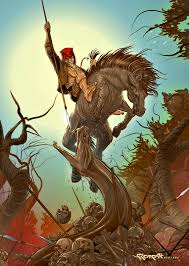

In the very beginning there lived a being so large that he can not be compared with any known thing. His name was Melu, and when he sat on the clouds, which were his home, he occupied all the space above. His teeth were pure gold, and because he was very cleanly and continually rubbed himself with his hands, his skin became pure white. The dead skin which he rubbed off his body was placed on one side in a pile, and by and by this pile became so large that he was annoyed and set himself to consider what he could do with it.
Finally Melu decided to make the earth; so he worked very hard in putting the dead skin into shape, and when it was finished he was so pleased with it that he determined to make two beings like himself, though smaller, to live on it.
Taking the remnants of the material left after making the earth he fashioned two men but just as they were all finished except their noses, Tau Tana from below the earth appeared and wanted to help him.
Melu did not wish any assistance, and a great argument ensued. Tau Tana finally won his point and made the noses which he placed on the people upside down. When all was finished, Melu and Tau Tana whipped the forms until they moved. Then Melu went to his home above the clouds, and Tau Tana returned to his place below the earth.
All went well until one day a great rain came, and the people on the earth nearly drowned from the water which ran off their heads into their noses. Melu, from his place on the clouds, saw their danger, and he came quickly to earth and saved their lives by turning their noses the other side up.
The people were very grateful to him, and promised to do anything he should ask of them. Before he left for the sky, they told him that they were very unhappy living on the great earth all alone, so he told them to save all the hair from their heads and the dry skin from their bodies and the next time he came he would make them some companions. And in this way there came to be a great many people on the earth.
EPIC
” The Mansaka and the Golden Guitar “
Cj Kuizon
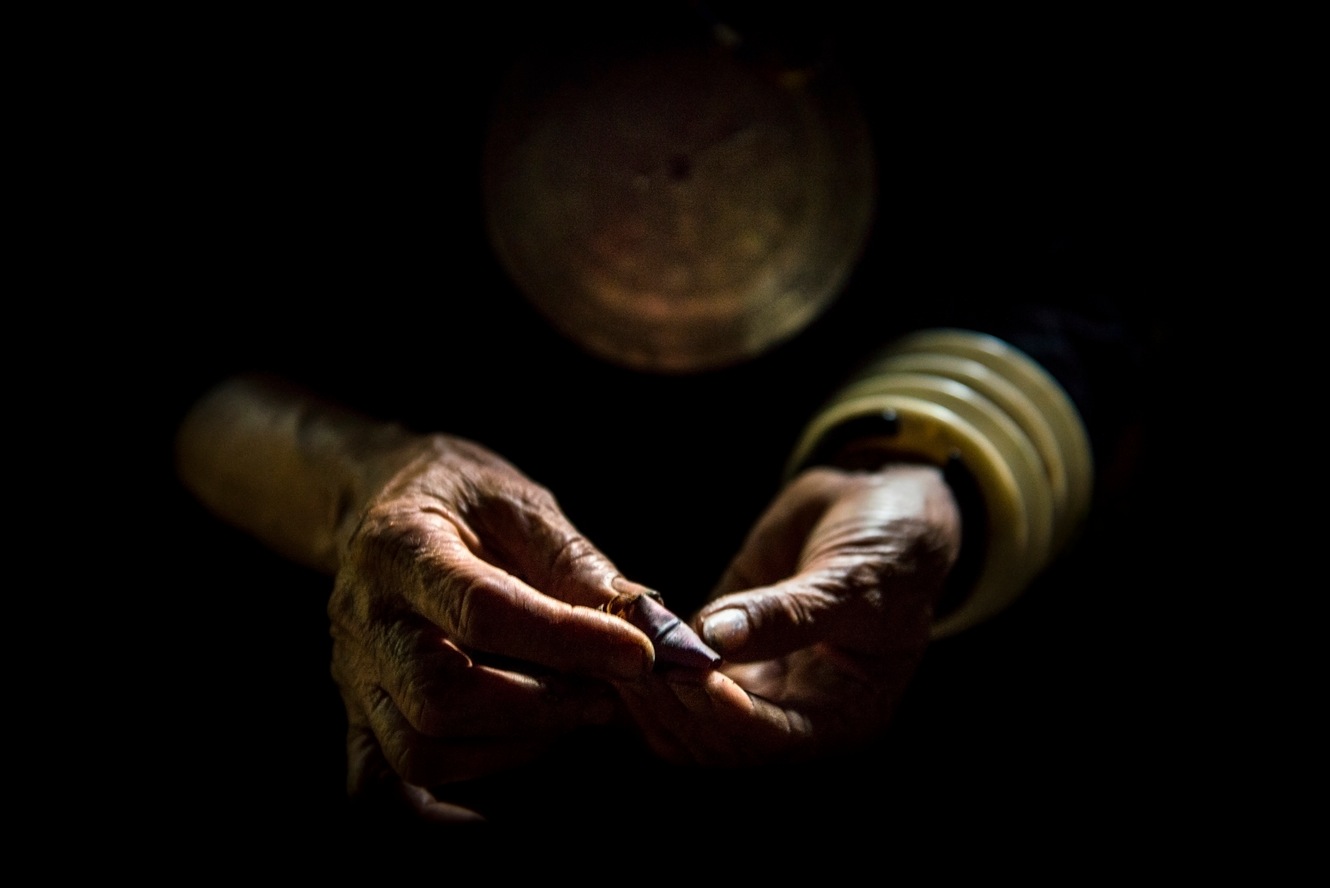

The Mansaka, an indigenous tribe in the provinces of Davao del Norte and Compostela Valley, once possessed a golden guitar, which they played when they sang their songs of longing, aspirations and victory.But as time went by, they realized that nobody appreciated their songs anymore, so they hurled the guitar into the deepest part of the sea. Now they can only sit and look at the sea, towards the place where they hurled their guitar.
The story of the Mansaka’s golden guitar is only one of the epics of the Lumads (a collective term for the indigenous peoples of Mindanao) that speak of golden objects.
According to Dr. Carmen Unabia, former dean of Central Luzon State University in Munoz in Nueva Ecija, golden objects pepper the folklore of the Lumad. Unabia, who recently guested an afternoon of storytelling at the Museo Dabawenyo, said she came upon these stories from the Lumad elders she had spoken with for her graduate and doctorate degrees. She believes that the presence of gold in Lumad literature depicts a history of abundance of the precious mineral. “It revealed that, sometime in their lives, they were rich in gold,” she said.
A Nanangon folktale, which forms part of the oral literature of Bukidnon, also mentioned gold. This was particularly true in the story of a monkey who wanted to marry the king’s daughter. The king, of course, did not want the monkey to marry his daughter but instead of refusing him outright, the king put up tests and obstacles in the hope that the monkey would give up. But the monkey was able to complete the tasks. Finally, the king gave the final test. He wanted to wake up the next morning to find his surroundings turned into gold. Thinking that he had finally driven the monkey away, the king woke up the next morning to see that all the trees, all the mountains have turned into gold. The king had no choice but to marry off his daughter.
On the day of the wedding, the king and the princess were surprised to find out that the monkey was actually the brave and handsome warrior Bataay in disguise.
But back then, gold was not the medium of exchange, Unabia said. “It could not buy even a single tomato,” she said. The Lumads learned to value gold because it made objects glitter and look more special. Since gold was abundant, they used the attractive metal to decorate everyday objects — furniture, machete handles, stairs, and even handkerchiefs. Unabia said the Subanons from the Zamboanga Peninsula speak of a princess who desperately wanted to send a message to her husband fighting in a battle across the ocean. With no mobile phone at that time, she spoke to her golden handkerchief and let it fly across the waters. The handkerchief brought her message to her husband. Other Lumad stories depicted everyday objects made of solid gold or gold trimmed. They all showed the role that the precious metal played in the lives of the Lumad. “Anything that is glorified is always likened to gold,” Unabia said.
When the Chinese arrived, the Lumads traded what they had for large porcelain jars. “These were very useful to them during rituals,” explained Unabia. “Wine had to made months before in order to have time to ferment and the Lumads needed a large container for this. But these jars seemed very plain so they painted them with gold.” Unabia also recounted that the handle of the dagger of Alisngangan, the bravest man in the Subanun legends, was made of gold. The legendary warrior’s body did not have curves but edges — from the daggers that he had swallowed. Among the Lumad stories was the golden spaceship — yes, spaceship — piloted by Datu Malagunot used to transport the virtuous souls up into heaven.
Unabia said she expects people to be skeptical about these stories. “Literature is only a representation, a symbolic representation of what is happening in the people’s lives,” she explained.
She said it was up to the people if they wanted to fathom the relevance, the truth behind the stories. “If it is precious, look for what makes it precious.”
Sources:
- http://jessamaemontealegre.blogspot.com/2016/04/myths-legends-and-folktales-in-region.html?m=1
- https://www.kapitbisig.com/philippines/english-version-of-epics-mga-epiko-the-guman-of-dumalinao-of-the-suban-on-tribe-of-northwestern-mindanao_1191.html
- http://www.choosephilippines.com/do/history-and-culture/3545/tales-giant-balete-tree-talikud
- https://www.sacred-texts.com/asia/pft/pft41.htm
 Philippine Literature